
Across Arizona, too many adolescent girls carry the invisible weight of exploitation, coercion, and survival-mode coping. For teen girls who have been trafficked—or who are at high risk—healing requires more than a safe bed. It requires trauma-informed treatment, consistent structure, and a team trained to rebuild trust step by step.
Mingus Mountain Youth Treatment Center (MMYTC) provides that kind of care: a nurturing, clinically grounded residential environment for girls ages 12–17 with complex trauma, behavioral health needs, and substance use challenges—especially those impacted by sexual exploitation and trafficking.
A trauma-informed pathway from crisis to resilience
Trafficking often overlaps with chronic trauma, disrupted attachment, substance use, and high-risk behaviors that were once necessary for survival. MMYTC meets clients with compassion and clarity—focusing on safety, stabilization, and skills that support long-term recovery.
Care is individualized and supported by an evidence-based clinical framework that includes:
- Trauma-Focused Cognitive Behavioral Therapy (TF-CBT) and EMDR for trauma recovery
- Dialectical Behavior Therapy (DBT) skills for emotion regulation, distress tolerance, and interpersonal safety
- Psychiatric care and 24/7 nursing support
- Sanctuary Model-certified trauma-responsive programming that builds shared language, values, and practice
- Specialized trafficking-focused curricula like My Life My Choice and Ending the Game
Support that extends beyond residential treatment
Healing doesn’t end at discharge. MMYTC emphasizes a transitional continuum of care, helping girls practice new skills in real-world contexts through therapeutic group homes—so reintegration can happen with more stability, support, and dignity.
This continuum is designed to help clients strengthen:
- Daily living and coping skills
- Healthy relationship boundaries and self-advocacy
- School engagement and future planning
- Community supports that reduce vulnerability to re-exploitation
What MMYTC provides at a glance
| Area of support | What it looks like at MMYTC | Why it matters for trafficking survivors |
|---|---|---|
| Safety and stabilization | Trauma-informed milieu, 24/7 nursing, crisis de-escalation training | Creates predictability and reduces re-traumatization |
| Evidence-based therapy | TF-CBT, EMDR, DBT, individual/group/family therapy | Treats trauma drivers behind behaviors and symptoms |
| Trafficking-specific support | My Life My Choice, Ending the Game | Addresses coercion dynamics, grooming, and exploitation risk factors |
| Education | Fully accredited academics (North Central Association) | Restores progress, confidence, and future options |
| Transition planning | Therapeutic group homes and continuum of care | Helps sustain recovery and reduce return-to-risk environments |
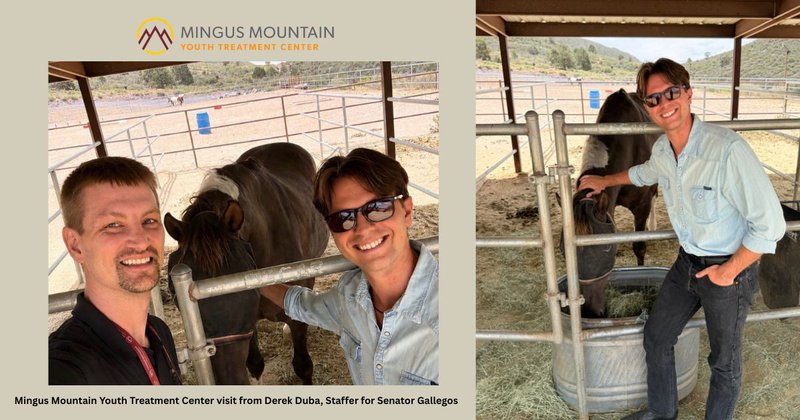
MMYTC is grateful for community leaders who take time to understand what trauma-informed care looks like in practice. A recent visit from Derek Duba of Senator Gallegos’ office reflected a shared commitment to protecting Arizona youth and strengthening pathways to recovery for girls impacted by trafficking and exploitation
A message of hope for families and referring partners
When a teen has been trafficked or is at risk, it’s easy for families and systems to feel overwhelmed. MMYTC exists to bring structure to the chaos—without judgment—and to help girls reconnect with safety, identity, and hope.
Learn more about Mingus Mountain Youth Treatment Center and its trauma-informed programs at mmytc.com.