
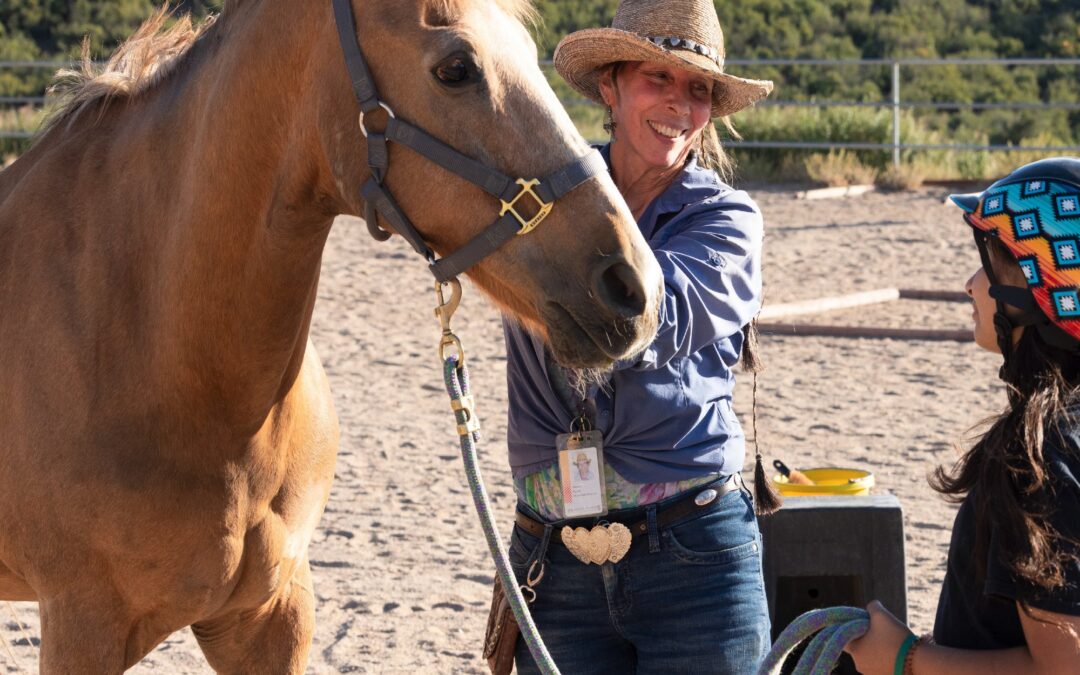
When an adolescent girl has lived through trauma, addiction, anxiety, mood instability, or exploitation, “talking about it” can feel impossible—especially early in treatment.
Equine therapy can offer a different doorway.
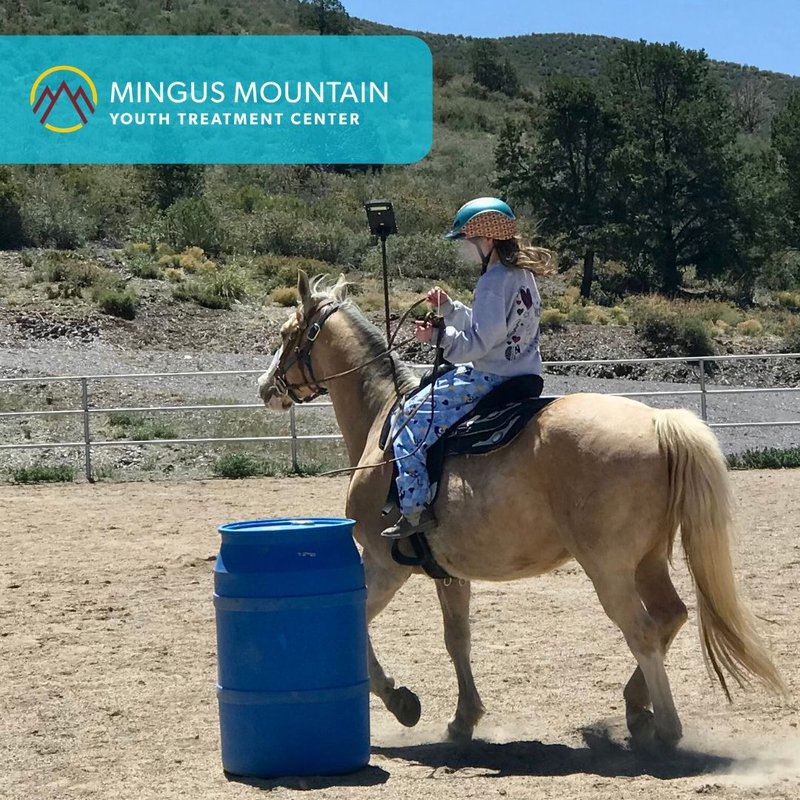
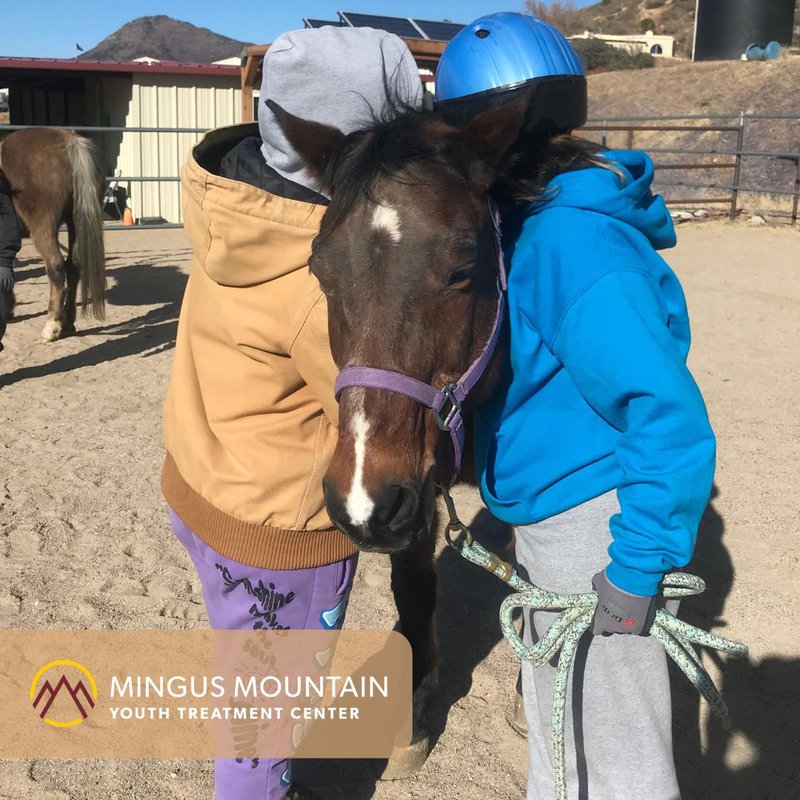
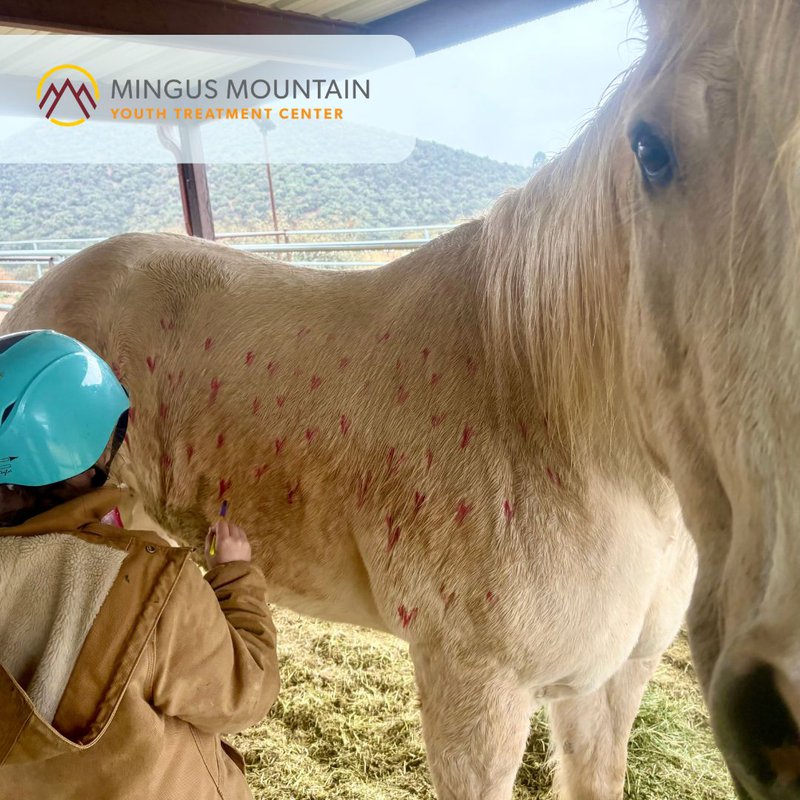
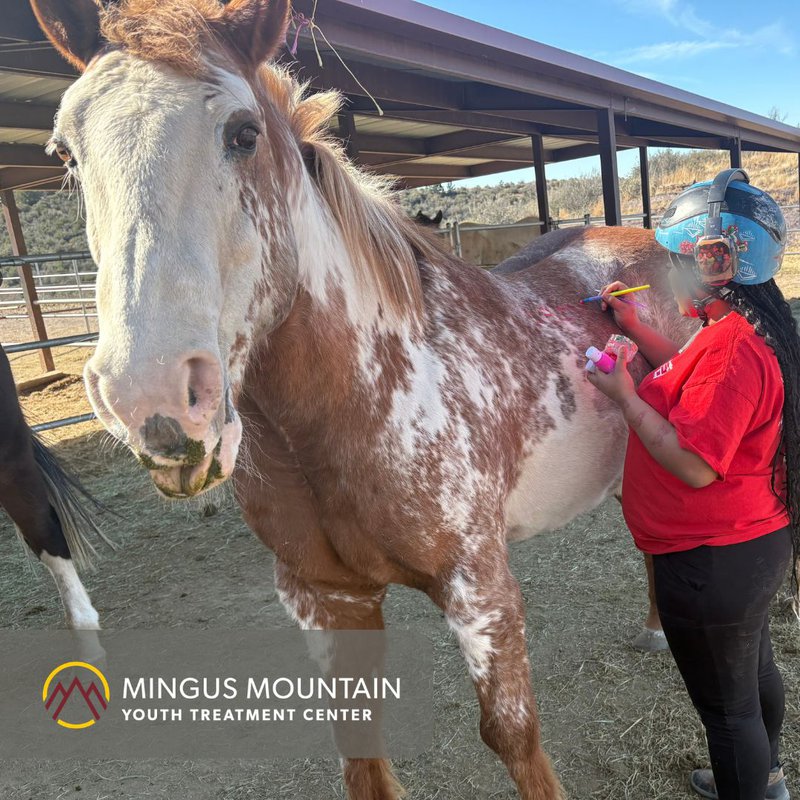
At Mingus Mountain Youth Treatment Center (MMYTC), adolescent girls ages 12–17 have the opportunity to participate in Equine Therapy as part of their overall treatment experience. In a calm, structured setting, horses help teens practice the very skills that trauma and substance use often disrupt: trust, boundaries, body awareness, and emotional regulation.
Why equine therapy can be a powerful fit for trauma recovery and substance use recovery
Many teens arrive to residential treatment with a nervous system that has learned to stay on high alert. They may be coping with:
- Trauma symptoms (hypervigilance, shutdown, intrusive memories)
- Substance use and behaviors used to “numb out” or escape distress
- Anxiety, panic, or chronic irritability
- Mood disorders, emotional overwhelm, or self-harm urges
- Behavioral challenges rooted in survival responses
- Exploitation or trafficking trauma and complex trust injuries
At Mingus Mountain Youth Treatment Cent, we treat these concerns with evidence-based, trauma-focused approaches (including therapy modalities like TF-CBT, DBT, and EMDR as described in our clinical services overview). Equine therapy complements that work by creating real-time, felt experiences of safety, choice, connection, and self-control.
Horses communicate in a way teens can feel beyond words.
Horses don’t require a teen to explain her story.
They respond to what is happening in the present moment—through:
- Breath and pace
- Body posture and muscle tension
- Movement, distance, and boundaries
- Calmness vs. intensity in approach
That matters for trauma recovery. Teens often know they “should calm down,” but their body doesn’t yet know how.
In equine sessions, a teen can experience a gentle cause-and-effect relationship: when she slows down, grounds her body, and breathes, the horse often settles too. This can help regulation move from intellectual (“I know what to do”) to embodied (“I can do it, even when I’m activated”).
Trust is built through consistency, not pressure
For adolescent girls who have been hurt by adults, betrayed by peers, or harmed in relationships, trust isn’t built with reassurance alone.
It’s built through consistent patterns:
- Clear expectations
- Predictable routines
- Respect for consent and pacing
- Safe, coached practice
Equine sessions are uniquely suited for this because the relationship grows through repeated small interactions—showing up, grooming, leading, pausing, trying again.
MMYTC’s overall program structure is designed to reinforce those same principles across the day—from therapy to school to daily living. You can learn more about how our campus supports adolescent girls ages 12–17 in our residential treatment program.
Non-verbal communication helps teens practice boundaries
Many teens in treatment have a complicated relationship with boundaries:
- Some have learned to tolerate too much
- Some protect themselves by pushing everyone away
- Some alternate between shutdown and explosion
With horses, boundaries are concrete. A teen practices:
- Approaching with awareness
- Noticing “too close/too fast” signals
- Adjusting in the moment
- Repairing after a mistake
This “give-and-take” becomes a safe rehearsal for real-world relationships.
Mindfulness, impulse control, breath work, and sensory feedback—taught in real time
Many residents have tried coping skills that didn’t “stick,” especially when emotions spike.
Equine therapy helps because skills are practiced while the body is activated and engaged:
- Mindfulness: staying present with the horse’s movement, rhythm, and cues
- Breath work: using slow breathing to influence focus, steadiness, and confidence
- Impulse control: choosing pace and pressure instead of reacting quickly
- Grounding and Sensory feedback: noticing grounding sensations (feet, balance, temperature, rhythm)
These are not abstract ideas. They become actions teens can repeat later—during group therapy, in the classroom, or when a difficult phone call brings up big feelings.
How do these work together?
Mindfulness helps a teen notice escalation early. Breath helps settle the nervous system enough to think.
Grounding anchors them in the present (not the trauma memory or the urge).
Impulse control becomes possible because there is now space to choose a safer action.
MMYTC’s approach: trauma-informed care within a Sanctuary Model™ culture
Trauma-informed care is more than being kind. It’s an organized way of creating safety and supporting change.
Mingus Mountain Youth Treatment Center has completed a three-year certification in the Sanctuary Model™ and is serves as the overarching model guiding service delivery and organizational processes. You can read more about this commitment on our about page and in our article on how the Sanctuary Model supports trauma-informed language and tools.
In practical terms, this shows up in Equine Therapy through:
- A predictable, step-by-step structure
- A focus on emotional safety and respect
- Coaching that supports empowerment (not shame)
- Consistent routines that build a teen’s sense of control and capacity
For survivors of exploitation or trafficking, emotional safety and empowerment are essential. MMYTC’s specialized focus is described in our Empowerment over Exploitation programming.
Fidelity and transparency: why accreditation matters in experiential therapies
Experiential therapies can be powerful—but they must also be delivered with care, ethics, and consistency.
MMYTC is accredited by the Joint Commission, as noted in our residential treatment and about pages.
For families and referral partners, this matters because it supports a culture of:
- Clear standards and training
- Documentation and quality processes
- Ongoing evaluation and accountability
Equine therapy at MMYTC is not “random time with horses.” It is guided by trained professionals, integrated into a broader clinical program, and aligned with our commitment to safe, trauma-responsive care.

Led with expertise: Equine Director Mickey Kissell (PATH certified)
MMYTC’s Equine Therapy program is thoughtfully led by Equine Director Michelle “Mickey” Kissell, who is PATH Intl.–certified.
In our interview-style blog post, Horses are the best listeners, Mickey describes how flexibility and trauma-informed pacing help girls connect—sometimes through riding, sometimes through quiet proximity, and sometimes through supportive tasks like helping in the barn.
In another post, Trauma informed approached to equine therapy, Mickey shares how MMYTC implemented a structured, multi-session approach that focuses on trauma, trust-building, and measurable progress toward treatment goals.
Healing environment: the Arizona mountainside and nature-based regulation
Setting is not just “nice.” For many teens, it’s therapeutic.
MMYTC’s mountainside environment supports:
- Space to breathe and decompress
- Movement and rhythm through outdoor activity
- Opportunities for nature walks and grounding
- A calmer sensory experience than many urban environments
For adolescent girls who feel constantly “on edge,” nature exposure can make it easier to access regulation skills and stay engaged in treatment.

Animal-assisted therapy: connection beyond the arena
At MMYTC, residents can also experience animal-assisted interactions with our on-campus miniature donkeys (noted in our residential treatment page).
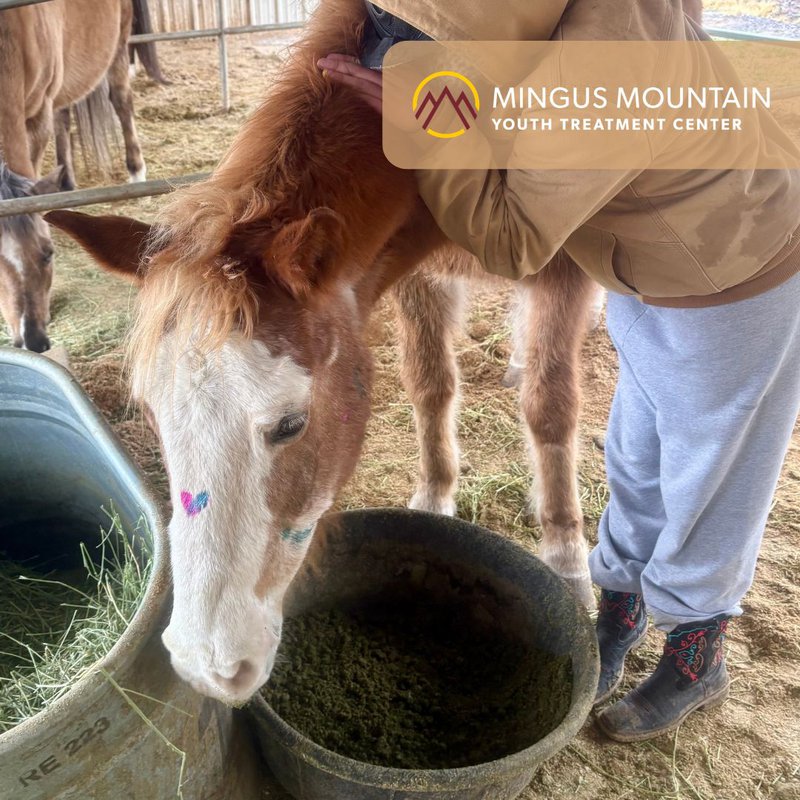
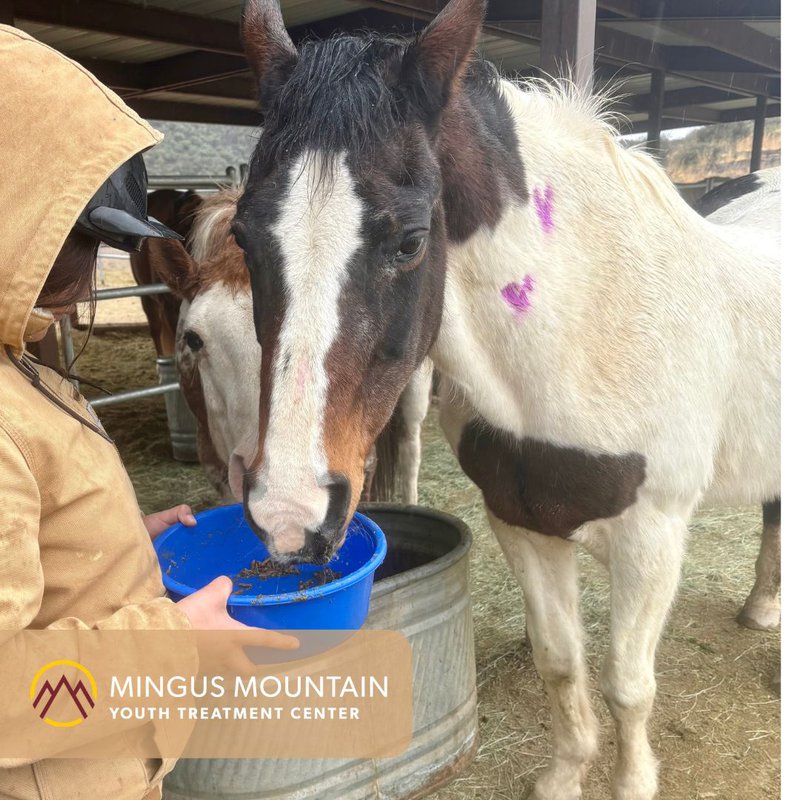
For some teens—especially those who are fearful, shut down, or unsure about horses—smaller animals can be a more approachable first step. Caring for animals also reinforces:
- Consistent routines
- Gentle responsibility
- Compassion and safe bonding
- A sense of being needed in a healthy way
Every girl has access—regardless of diagnosis. Some girls will work with animals by caring for them, feeding them, assisting with grooming and walking. Those that are able will also learn guided rides, reading and riding sessions and, arena guiding.
At MMYTC, each resident’s plan is individualized, and each girl brings her own history.
If you are a parent, caregiver, or referral partner and want to learn whether MMYTC could be an appropriate next step, we invite you to start with our referrals page. You can also explore our ongoing commitment to long-term support through our lifetime commitment program.
A final, hopeful note
Healing after trauma and addiction is not about forcing “bravery.” It’s about creating safety, consistency, and real opportunities to practice new skills.
In Equine Therapy, adolescent girls get to practice those skills with a steady partner who responds honestly, in the moment—helping trust and confidence grow one interaction at a time.